
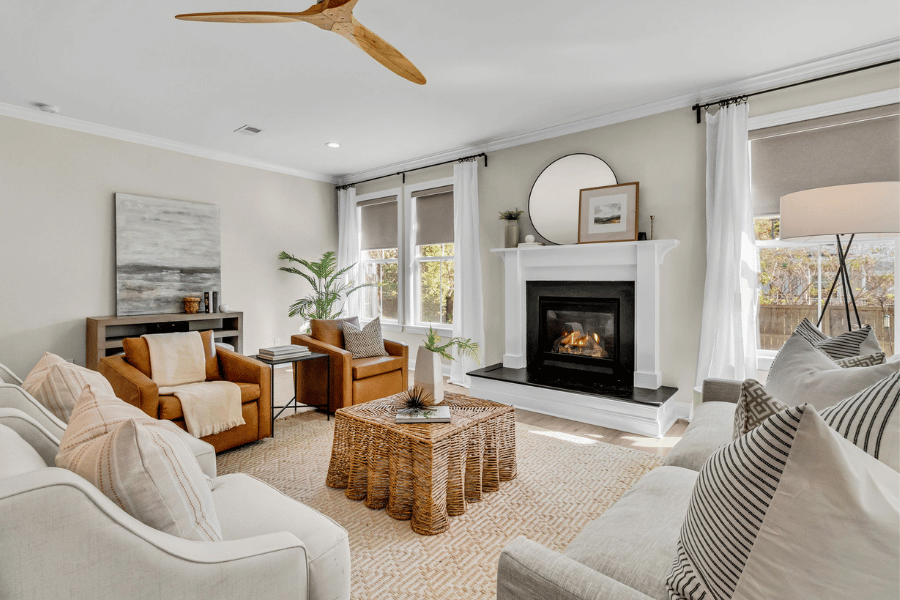
Article Summary
- Home staging rates vary based on property size, whether the home is occupied or vacant, the number of rooms staged, and the length of the staging period.
- Professional staging can improve listing photography, define room purpose, and help buyers connect emotionally with a property.
- Vacant staging generally requires a larger investment because it includes furniture, accessories, delivery, installation, and rental time.
- Sellers should compare staging costs with the potential expense of price reductions, extended market time, and additional carrying costs.
- Lowcountry Staging Specialists provides master-level certified staging for occupied and vacant homes throughout the Charleston, SC area.
Home Staging Rates: An Investment to Maximize Your Home’s Sale
When preparing to sell, homeowners often ask how much staging costs. It is an important question, but price should be considered alongside the value professional staging can bring to a listing.
Staging is not simply decorating a home. It is a strategic marketing service that helps improve first impressions, strengthen listing photos, and make it easier for buyers to understand how a property could support their lifestyle. Since 2015, Lowcountry Staging Specialists has helped homeowners and real estate agents throughout Charleston, Mount Pleasant, Summerville, and the surrounding Lowcountry prepare homes for stronger market presentation.
What Determines Home Staging Rates?
Home staging rates vary because every property has different needs. Pricing may depend on the home’s square footage, number of rooms, architectural style, price point, location, and whether it is occupied or vacant.
Other factors may include furniture and accessory requirements, delivery logistics, installation and removal, recommended updates, and the length of the staging period.
Lowcountry Staging Specialists provides more information about how much home staging costs in Charleston, SC, including the factors that can influence a customized proposal.
The most accurate way to understand your investment is through a professional consultation based on your specific property and selling goals.
Occupied Staging vs. Vacant Staging
Occupied staging typically focuses on using the homeowner’s existing furniture and décor more effectively. The stager may recommend rearranging rooms, removing excess items, depersonalizing spaces, improving visual flow, and adding select finishing touches before photography.
Vacant staging usually requires a larger investment because the property must be furnished. This may include sofas, dining furniture, beds, rugs, artwork, lamps, accessories, delivery, installation, rental time, and removal.
Although the service levels differ, both approaches share the same goal: presenting the home in a polished, buyer-focused way.
How Staging Can Help Maximize Home Sale Potential
To maximize home sale potential, sellers need to consider more than the asking price. Buyers often begin online, where photography and presentation can determine whether they schedule a showing.
Professional staging can help define each room’s purpose, improve furniture scale, highlight architectural features, create stronger visual flow, and reduce distractions. Domene New York explains why home staging is worth the investment, particularly when staging improves buyer perception and creates a more memorable emotional connection.
Lowcountry Staging Specialists also explains how staged homes can sell faster by helping listings photograph well, communicate function, and compete more effectively.
Staging Rates vs. the Cost of Sitting on the Market
Sellers should compare staging costs with the possible expenses of an extended listing period. Additional mortgage payments, utilities, insurance, upkeep, and price reductions can become significant.
The National Association of Realtors reports that home staging can boost sale prices and reduce time on market. While staging cannot guarantee a specific selling price or timeline, it can reduce presentation-related obstacles that may discourage buyers.
Why Local Staging Expertise Matters
Buyer expectations vary throughout the Lowcountry. Historic Charleston homes may need staging that respects original character, while Mount Pleasant properties may benefit from an elevated coastal presentation. Summerville homes may call for warm, functional spaces, and luxury or waterfront listings often require a refined visual strategy.
Lowcountry Staging Specialists uses local market knowledge, buyer psychology, and master-level certified staging expertise to tailor each occupied or vacant property.
If you are preparing to sell in Charleston, Mount Pleasant, Summerville, or the surrounding Lowcountry, contact Lowcountry Staging Specialists for a customized consultation and staging proposal.
